
Mon – Fri | 8:00 am – 6:00 pm
Sat – Sun | closed

Tag: Medication Management

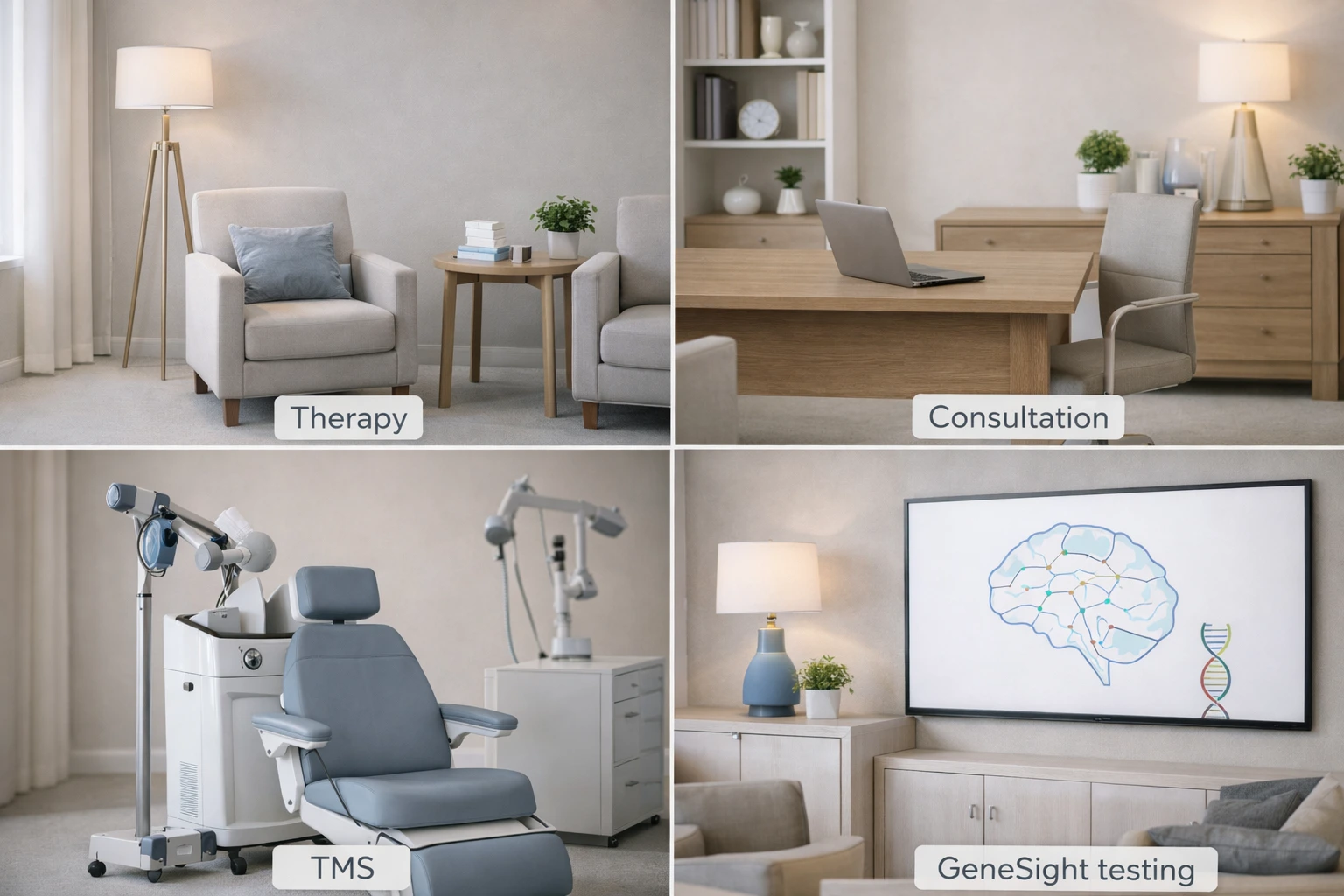
  • Mental Health Services in Renton: How to Choose Between Therapy, Medication Management, and GeneSight Testing

    Mental Health Services in Renton: How to Choose Between Therapy, Medication Management, and GeneSight Testing

    Searching for mental health services can feel overwhelming, especially when several options seem similar at first glance. Therapy, medication management, Spravato (esketamine), and GeneSight testing each play different roles in care. The right path depends on symptoms, treatment history, goals, and how much support is needed at a given stage.

    For people exploring mental health services in Renton, understanding the purpose of each service can make the decision process easier.

    Therapy is often one of the most familiar starting points. It gives patients a structured space to talk through symptoms, patterns, stressors, relationships, and coping strategies with a trained mental health professional. At OPMHS, therapy includes evidence-based approaches such as CBT and EMDR, along with mindfulness-based strategies. Therapy can be especially helpful for anxiety, trauma, stress, emotional regulation, and many forms of depression. It is often a strong fit for people who want to better understand their thoughts, build coping tools, and create long-term emotional resilience.

    Medication management serves a different purpose. It focuses on psychiatric evaluation, medication planning, symptom monitoring, and follow-up care. This is not just about writing a prescription. It is an ongoing clinical service designed to reduce symptoms, prevent relapses, and adjust treatment as needed over time. Medication management may be useful when symptoms are significantly affecting sleep, mood, focus, daily functioning, or quality of life. It can also be an important option for individuals who have already tried therapy or who need a broader treatment plan.

    For many patients, therapy and medication management are not competing choices. They work well together. Therapy addresses thought patterns, emotional processing, behavior, and daily coping. Medication management can support the biological side of care by helping stabilize mood, improve concentration, reduce anxiety, or support other symptom changes that make therapy more effective. In many cases, the most sustainable progress comes from combining both approaches thoughtfully.

    Spravato is typically considered when depression has not improved enough with standard antidepressant medications. It is an FDA-approved treatment derived from esketamine and is administered as a nasal spray under medical supervision in a clinical setting. Because it can cause temporary changes in alertness or perception, patients are monitored for a period after each session to ensure safety and comfort. Spravato is usually incorporated into a structured treatment plan alongside ongoing psychiatric care, rather than used as a first-line option. For individuals experiencing treatment-resistant depression, it offers a different mechanism of action that may help when traditional approaches have not provided sufficient relief.

    GeneSight testing becomes relevant when medication decisions have become frustrating or unclear. Some people have tried more than one medication and felt disappointed by side effects or minimal improvement. GeneSight testing adds another layer of information by showing how a person’s genetics may influence medication response and metabolism. It does not diagnose a condition or replace clinical judgment, but it can help reduce guesswork and support a more personalized medication plan. For patients who feel stuck in a cycle of trial and error, this can be a valuable next step.

    So how does someone choose?

    A person dealing primarily with trauma, anxiety, stress, or relationship-related distress may begin with therapy. A person experiencing mood symptoms, attention difficulties, or persistent psychiatric symptoms that are disrupting daily life may benefit from medication management. Someone who has struggled to find the right medication may want to discuss whether GeneSight testing makes sense. And someone with difficult-to-treat depression who has not had enough relief from standard approaches may need a conversation about advanced treatment options such as TMS.

    The good news is that patients do not have to figure this out alone. A trustworthy mental health provider helps guide the process. That means beginning with a proper evaluation, identifying the most appropriate next step, and adjusting the plan as treatment continues. The goal is not to force every patient into the same pathway. The goal is to match the level and type of care to the actual need.

    In Renton, access to integrated mental health services matters because convenience, continuity, and clarity all influence whether people follow through with care. When therapy, medication management, advanced options, and personalized planning are part of the same ecosystem, patients can move forward with more confidence.

    Mental health care should feel understandable, not confusing. Knowing the role of each service is the first step toward making an informed decision. With the right guidance, choosing care becomes less about guessing and more about building a path that fits.

    FAQ‘s

    Therapy focuses on emotional support, thought patterns, behavior, coping strategies, and structured conversations with a licensed mental health professional. Medication management focuses on psychiatric evaluation, medication planning, symptom monitoring, and treatment follow-up over time.

    Therapy can be a good first step for people seeking support with stress, trauma, anxiety, relationship concerns, emotional regulation, or long-term coping skills. A provider can help determine whether therapy alone or a combination approach makes more sense.

    Medication management may be recommended when symptoms are affecting mood, sleep, focus, daily functioning, or overall stability in ways that require clinical assessment and ongoing monitoring. Recommendations depend on the full evaluation and treatment history.

    GeneSight testing may help support more personalized medication planning by showing how a person’s genetics may affect medication response. It is one part of treatment planning and does not replace evaluation, therapy, or ongoing follow-up care.

    Yes. Many treatment plans combine services such as therapy and medication management, or additional options when clinically appropriate. Integrated care often helps create a more complete and personalized path forward.

  • How GeneSight Testing Can Help Reduce Trial and Error in Mental Health Treatment

    How GeneSight Testing Can Help Reduce Trial and Error in Mental Health Treatment

    Finding the right mental health treatment can take time. For many people, the most frustrating part of the journey is not starting care, but navigating the trial-and-error process that can come with psychiatric medication. One medication may cause unwanted side effects. Another may not feel effective enough. In some cases, the process of adjusting treatment can feel discouraging, especially when someone is already managing depression, anxiety, ADHD, or other mental health concerns.

    That is where GeneSight testing can become an important part of a thoughtful treatment plan.

    GeneSight is a type of genetic testing designed to give providers more information about how a person’s body may process certain psychiatric medications. It is not a diagnosis, and it does not replace a full psychiatric evaluation. Instead, it adds another layer of insight that can help guide medication decisions in a more informed and personalized way.

    At OPMHS, GeneSight testing is positioned as a practical tool for people who have had difficulty finding the right medication fit. It may be especially helpful for those who have experienced significant side effects, limited improvement, or repeated medication changes over time. Rather than continuing to guess which options may work best, providers can use the test results as part of a broader clinical conversation.

    The testing process itself is simple. In most cases, it involves a quick DNA swab. That sample is then analyzed to identify patterns related to how the body metabolizes and responds to certain medications. Once results are available, the provider reviews them alongside the patient’s symptoms, health history, treatment goals, and other important factors. The test is not meant to make decisions on its own. It is a support tool that helps strengthen clinical judgment.

    One of the biggest benefits of GeneSight testing is clarity. Mental health treatment is rarely one-size-fits-all. Two people with similar symptoms may respond very differently to the same medication. Genetic testing helps explain part of that difference. When providers have more information from the beginning, treatment planning can become more focused, more efficient, and more personalized.

    This can be especially valuable in medication management. Psychiatric medication is most effective when it is monitored carefully over time. A provider does more than prescribe. They look at how symptoms are changing, whether side effects are manageable, whether sleep or mood patterns are improving, and whether the overall treatment plan still makes sense. GeneSight testing can support that process by helping providers choose options that align more closely with the individual.

    It is also important to understand what GeneSight testing does not do. It does not guarantee that one medication will work perfectly. It does not replace therapy, lifestyle support, or regular follow-up care. Mental health treatment works best when it is comprehensive. For some people, that may include medication management and therapy together. For others, it may involve additional services depending on the diagnosis, severity of symptoms, and long-term care goals.

    For individuals in Renton and across Washington who feel worn down by medication changes, GeneSight testing may offer a more structured next step. It can bring useful information into the conversation and reduce some of the uncertainty that often comes with psychiatric treatment. That can help patients and providers move forward with more confidence and more clarity.

    At OPMHS, the goal is not simply to prescribe a medication and wait. The goal is to build a care plan that is thoughtful, individualized, and responsive over time. GeneSight testing fits into that philosophy by supporting more precise medication decisions from the start.

    For people exploring mental health treatment options, a more personalized approach can make a meaningful difference. GeneSight testing is one more way to make the treatment journey feel less like guesswork and more like informed care.

    FAQ‘s

    GeneSight testing is a type of genetic test that gives providers more information about how a person’s body may process certain psychiatric medications. It is used as a support tool during treatment planning and may help guide more personalized medication decisions as part of ongoing care.

    GeneSight testing may help reduce some of the uncertainty involved in medication planning. Providers can review the results alongside symptoms, treatment history, side effects, and care goals to make better-informed decisions during medication management.

    GeneSight testing may be helpful for people who have had difficulty finding the right medication, experienced unwanted side effects, or gone through multiple medication changes without clear improvement. A provider can help determine whether it fits the overall treatment plan.

    No. GeneSight testing does not replace a full psychiatric evaluation. It is one tool that may support treatment planning, but providers still rely on clinical assessment, medical history, symptoms, and follow-up care to make decisions.

    GeneSight testing may be used as part of medication planning for conditions such as depression, anxiety, or ADHD when a provider believes additional insight could be helpful. It is most useful when combined with a full, individualized treatment approach.

    In some cases, GeneSight testing may help providers better understand medication fit when previous prescriptions caused unwanted side effects. It does not guarantee a perfect match, but it may support more personalized treatment planning.

  • What to Expect at a Psychiatric Medication Management Appointment in Renton

    What to Expect at a Psychiatric Medication Management Appointment in Renton

    Starting psychiatric care can feel like a big step. For many people, one of the first questions is simple: what actually happens during a medication management appointment?

    Medication management is more than receiving a prescription. It is an ongoing clinical process focused on understanding symptoms, reviewing treatment history, choosing an appropriate plan, and monitoring progress over time. At OPMHS, medication management is designed to support children ages five and older, teens, and adults through a patient-centered and holistic approach to mental wellness.

    The first appointment usually begins with a comprehensive psychiatric evaluation. During this visit, a qualified mental health professional gathers information about symptoms, past treatment experiences, medical history, family history, daily functioning, and current concerns. The purpose is not to rush into medication decisions. Instead, the provider aims to understand the full picture before making recommendations.

    This first step matters because mental health symptoms are often complex. Depression, anxiety, ADHD, bipolar disorder, PTSD, OCD, and related conditions can overlap in ways that are not always obvious. A careful evaluation helps ensure that treatment starts from a strong clinical foundation. In many cases, patients are also asked about sleep, appetite, concentration, stress patterns, and past reactions to medication. All of this information helps shape the care plan.

    Once the evaluation is complete, the provider may recommend medication, discuss possible options, or suggest additional next steps before starting anything new. That conversation typically includes the purpose of the medication, what it may help with, what side effects may be possible, and how progress will be monitored. A strong medication management visit should leave the patient with more clarity about the plan, not more confusion.

    Follow-up appointments are just as important as the initial visit. Mental health medication often requires adjustment over time. A dose may need to be changed. A medication may need more time. In some cases, a different option may be more appropriate. Follow-up care is where the provider tracks what is working, what is not, and what should happen next.

    This ongoing monitoring is one of the reasons medication management is such an important service. Effective psychiatric care is rarely about prescribing once and ending the conversation. It is about checking in, measuring response, watching for side effects, and making thoughtful updates as needed. This is especially important for patients who have had mixed experiences with medication in the past or who want a more consistent and supportive process.

    At OPMHS, medication management is also part of a broader treatment model. Medication may be one part of the care plan, but it is not always the only part. Some patients may also benefit from therapy, including approaches such as CBT or EMDR, depending on the condition and goals. Others may need a more specialized pathway if standard treatment is not producing enough relief. In those situations, integrated care becomes especially valuable because it allows the clinic to guide next steps more efficiently.

    Another important benefit is accessibility. OPMHS offers services in person in Renton and virtually through telehealth across Washington. That can make ongoing care easier for busy adults, families, and patients who prefer the convenience of virtual follow-up visits when appropriate. Telehealth does not replace quality care. When structured well, it can make medication management more consistent and more sustainable.

    For many people, the biggest fear before a psychiatric appointment is uncertainty. Not knowing what will be asked, whether concerns will be taken seriously, or how the plan will be explained can create added stress. A well-run medication management appointment should feel organized, collaborative, and respectful. The goal is to create a treatment plan that is clinically sound and personally relevant.

    Mental health care works best when patients feel informed and supported. Medication management provides that structure. It gives people a clear place to start, a clear process to follow, and a professional partner who can help guide changes over time.

    For those searching for psychiatric medication management in Renton, understanding the process can make the first step feel more approachable. Good care starts with good information, and the right appointment can help turn uncertainty into a plan.

    FAQ‘s

    A medication management appointment usually includes a review of symptoms, treatment history, current concerns, and how daily functioning is being affected. Providers may discuss medication options, possible side effects, follow-up plans, and how treatment will be monitored over time.

    It can be helpful to bring a list of current medications, past psychiatric treatment history, major symptoms, relevant medical information, and any questions about care goals. This helps the provider build a clearer and more complete treatment plan.

    Follow-up appointments vary depending on the care plan, symptoms, and whether treatment has recently changed. Some people need closer monitoring at the beginning, while others move to a more stable follow-up schedule over time.

    Yes, telehealth may be available for eligible patients in Washington depending on the service type, clinical needs, and provider recommendations. A clinic can help explain whether virtual care is appropriate for a specific situation.

    Medication management may support care for conditions such as depression, anxiety, ADHD, bipolar disorder, PTSD, OCD, and other mood-related concerns. Treatment recommendations depend on the individual evaluation and clinical judgment.

    Yes. Medication management and therapy are often used together as part of a broader treatment plan. This combination may help support both symptom relief and long-term emotional coping strategies.